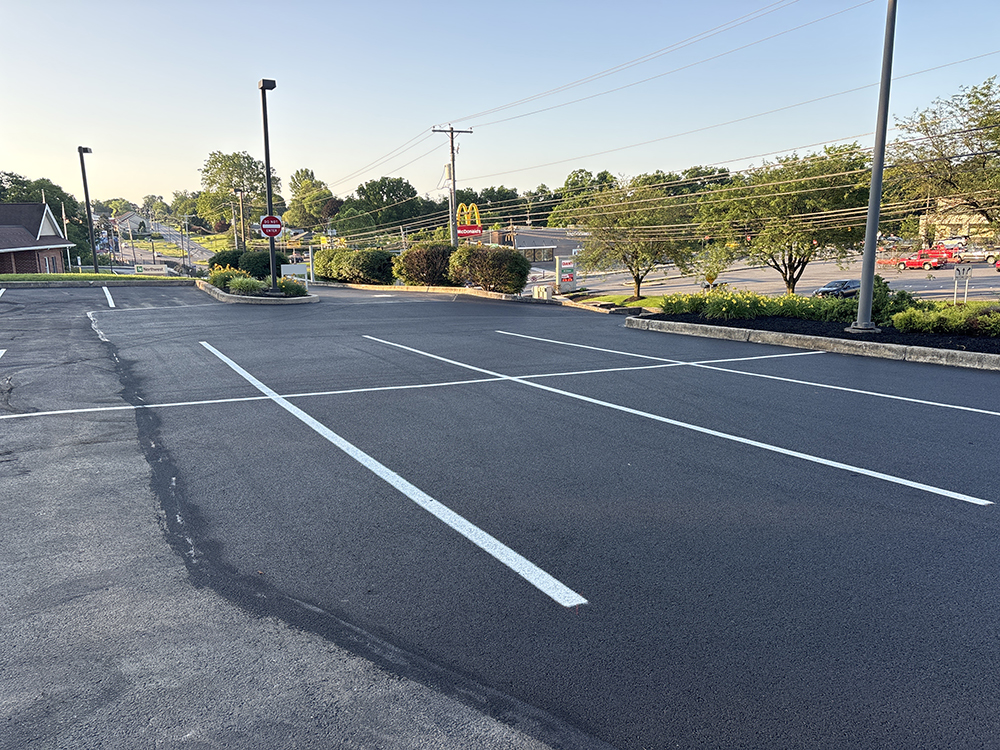
Commercial property owners in Elizabethtown deal with steady traffic from local factories, distribution centers, and the retail corridors near South Market Street. A new parking lot that cannot handle that load often fails long before its expected lifespan.
The short answer is that under-designing pavement leads to rapid structural breakdowns, costly asphalt repairs, and disruptions for tenants and customers. Local soil conditions, freeze cycles, and truck traffic make proper design even more important here in Lancaster County.
Let’s walk through the risks you face and what you can do to size your pavement correctly from the start.
Key Takeaways
- Under-designed pavement fails early under local freeze cycles and commercial traffic.
- Strong base design prevents moisture-driven failures in clay-heavy Elizabethtown soils.
- Accurate traffic and load assessments guide proper pavement thickness.
- Good drainage design is essential to prevent water damage and lifespan loss.
Structural and Performance Risks of an Under-Designed Parking Lot
When a new parking lot doesn’t get the structure it needs, several predictable problems start showing up fast in Elizabethtown’s soil and weather conditions.
Here are the most common failures we see when pavement is under-designed:
Premature Base Failure
Base layers carry the weight in any commercial lot, and they fatigue quickly when they are too thin or poorly compacted. Local clay-heavy soils around Elizabethtown trap moisture, so a weak base often softens after storms that sweep across the Conewago Creek area.
Once the base shifts, asphalt loses support and begins flexing each time a delivery truck pulls in. That movement creates cracking and uneven surfaces that spread across loading areas faster than many owners expect.
Stronger base depth gives you a margin against moisture and freeze cycles common in central Pennsylvania.
Accelerated Alligator Cracking
Alligator cracking occurs when asphalt flexes past its limit, and it is one of the earliest signs that design assumptions were too light. In commercial corridors like the Route 230 business district, daily freight traffic places concentrated stress on the top layers.
Under-designed pavement cannot carry repetitive wheel loads, so cracks form clusters and begin to spread outward. Those cracks let water seep in during winter, which widens the cracks each freeze cycle. Proper thickness and strong bonds between lifts reduce this pattern.
Early Rutting in High-Traffic Zones
Rutting develops when asphalt compresses under constant wheel paths. Loading lanes, dumpster pads, and drive-through areas near local businesses like the shops around Willow Street see repetitive paths from heavy vehicles.
In an under-designed parking lot, the asphalt thickness does not match those demands, and depressions form within months instead of years. Those ruts then collect water, which accelerates surface wear after summer thunderstorms.
Increasing thickness in predictable traffic paths prevents this pattern.
Rapid Surface Oxidation
Thin asphalt cools faster during paving and often fails to achieve full density, so oxidation speeds up. We see this often in commercial builds east of downtown near farmland, where wind exposure dries surface oils quickly.
When asphalt oxidizes, it becomes brittle and more prone to cracking under the temperature swings our region experiences from hot July days to freezing January nights. A stronger design allows the mix to retain enough binder to handle that expansion and contraction.
Higher-density asphalt paving also protects against UV bleaching on open lots.
Drainage Failures and Standing Water
Under-design often affects drainage, especially when slopes are minimized to save on grading costs. Low slopes allow water to pool near entrances and ADA routes that must stay safe for customers.
In parts of Elizabethtown that sit lower in elevation near the Conoy Creek watershed, this water has nowhere to go once the ground saturates. Standing water weakens the asphalt binder and pushes fines out of the base layer.
Proper slope design and subgrade preparation prevent these issues long before paving begins.
How To Assess Your Parking Lot’s Needs To Avoid Under-Design
A reliable design starts with clear data about your site, traffic, and local conditions in Elizabethtown. These steps help you size your pavement correctly and prevent the hidden risks that come from under-designing a commercial lot:
Gather Soil and Subgrade Information
Local soil composition changes quickly from firm shale-influenced areas near Bainbridge Road to soft, moisture-prone soils closer to farmland. A geotechnical evaluation helps determine how thick the base must be and whether stabilization is needed.
Subgrade testing reveals moisture levels, compaction limits, and any organic pockets that must be removed before paving. This step prevents soft spots that become future potholes.
Knowing your soil gives you a foundation that matches local ground conditions.
Determine Traffic Types and Weight Loads
Commercial properties across Elizabethtown serve different vehicles, from passenger cars at retail centers to Class 8 trucks entering industrial sites. The mix and frequency of those vehicles determine the pavement structure required for long-term performance.
Heavy trucks near distribution facilities off North Market Street create repetitive stress that thin asphalt cannot handle. Documenting daily volumes and identifying high-load areas lets us select the right thickness for each zone.
Clear traffic expectations give your design a realistic target.
Calculate Required Pavement Thickness
Thickness depends on load-bearing needs, base quality, soil strength, and drainage expectations. In areas with frequent freeze cycles, like the communities north of town toward Rheems, thicker layers protect against frost heave.
Commercial lots often need varied thicknesses, such as heavier-duty sections around dumpsters or delivery routes. Matching each area to its functional demand prevents premature failures. A structured system keeps damage from spreading from high-load zones into lighter-use sections.
Design Drainage for Local Weather Patterns
Lancaster County receives enough rain and snow melt that drainage must be a priority. Lots near flatter areas east of town often need added grading to avoid pooling. Proper slope design directs water away from buildings, driving lanes, and pedestrian zones.
A good design also considers inlet placement and ensures that paved areas move water efficiently during summer storms.
Reliable drainage protects all layers of your pavement.
Review Local Codes and Site Requirements
Commercial builds in Elizabethtown must follow zoning and ADA layout requirements that influence slope, curb placement, and pavement transitions. Some developments near historic districts have added restrictions on layout and surface appearance.
Utility access points, snow storage zones, and fire lane requirements also shape design decisions. Reviewing these site elements early prevents costly redesigns later.
Clear planning keeps your project compliant and efficient from the start.
Protect Your Investment With A Proper Pavement Design
A failing parking lot disrupts tenants, customers, and deliveries, and those problems grow fast once structural damage begins. Strong design prevents those headaches and protects the long-term value of your property.
At RDS Paving & Sealcoating, we tailor pavement structures for real commercial traffic patterns here in Elizabethtown. Our team sizes every layer to match local soil, drainage, and load needs. Contact us today to schedule a design review or request a quote so your new parking lot starts strong and stays reliable.
Frequently Asked Questions
How thick should my commercial parking lot asphalt be in Elizabethtown?
Thickness varies by soil and traffic, but commercial sections with truck activity often require multiple asphalt lifts totaling several inches plus a strong aggregate base. Our team evaluates local soil strength and load zones to recommend safe ranges for each part of the lot.
Do I need a geotechnical study before building a new lot?
A geotechnical report gives you real data on subgrade moisture, clay content, and compaction limits, which helps prevent early failures. Our team uses these reports to size the base and choose stabilization methods when local soils show high moisture retention.
What areas of a commercial lot need extra thickness?
Delivery lanes, dumpster pads, fire lanes, and drive-through paths usually need thicker pavement due to repeated heavy loads. Our crew designs each zone around real traffic patterns so those high-stress sections hold up long term.
How does local weather affect pavement design?
Freeze cycles and summer heat both strain asphalt, and water pooling speeds up cracking in our region. Our designs include proper slopes, drainage inlets, and layer depths to handle those temperature swings and rainfall patterns.