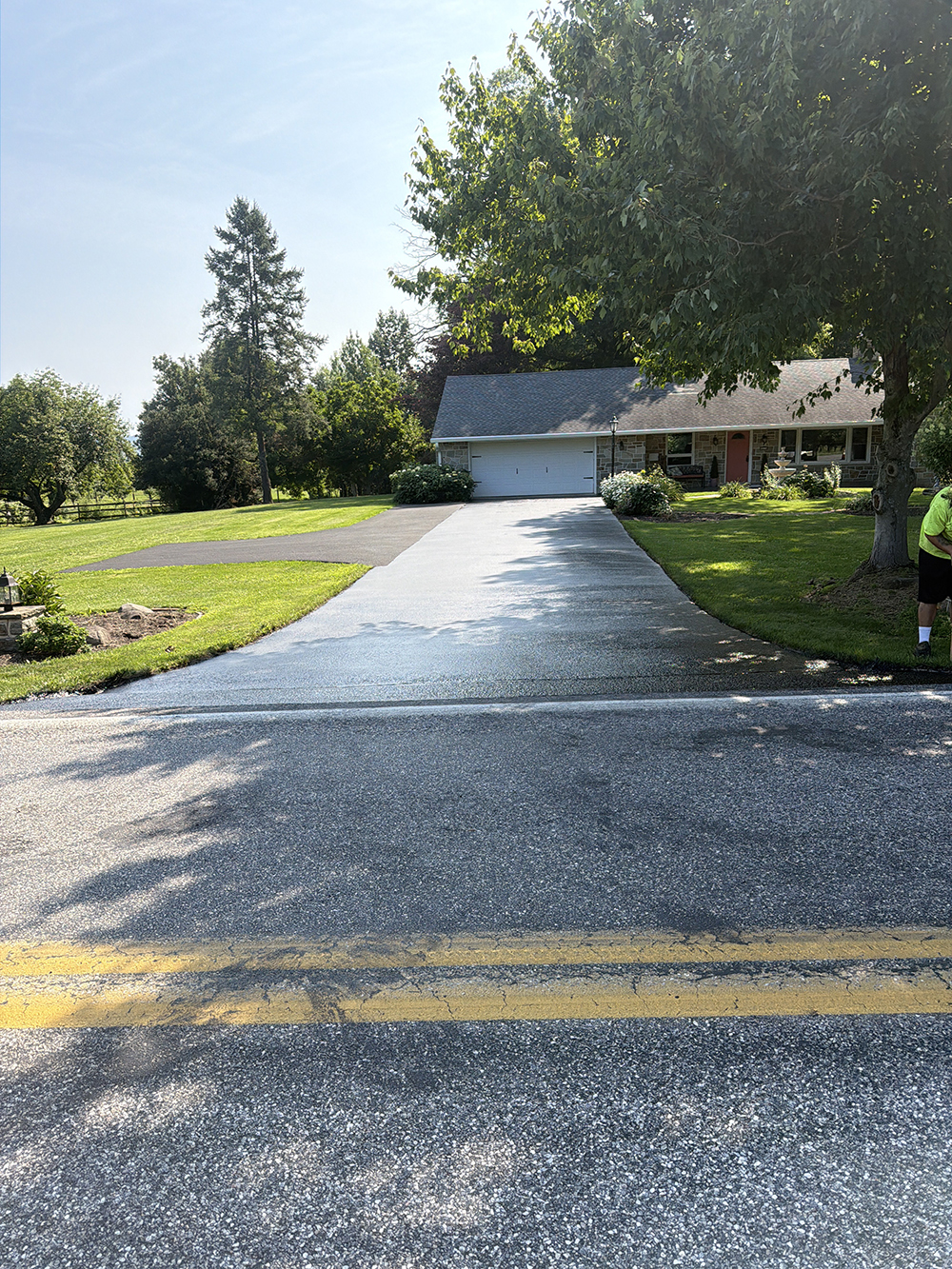
One part of this Mechanicsburg, PA driveway needed a fresh black finish. Another part needed more time.
The homeowner reached out to RDS Paving & Sealcoating through a vendor referral because the existing asphalt was fading toward gray. They wanted to bring back a clean appearance without replacing the driveway.
But an extension installed earlier that year meant we couldn’t treat every section the same way.
A Driveway With Two Different Ages
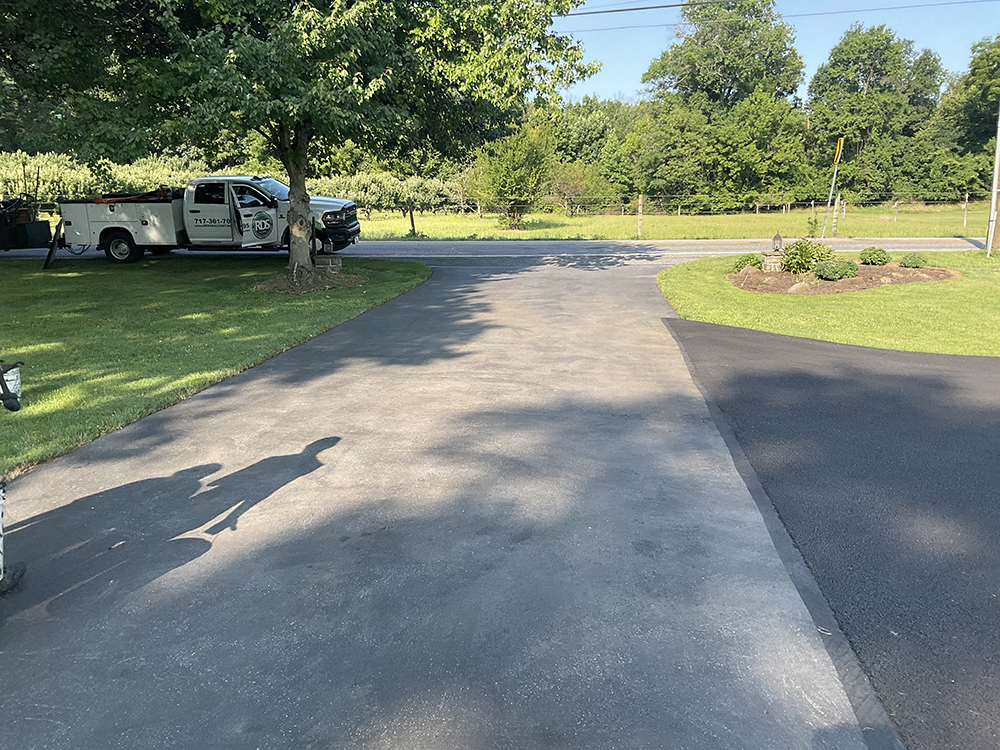
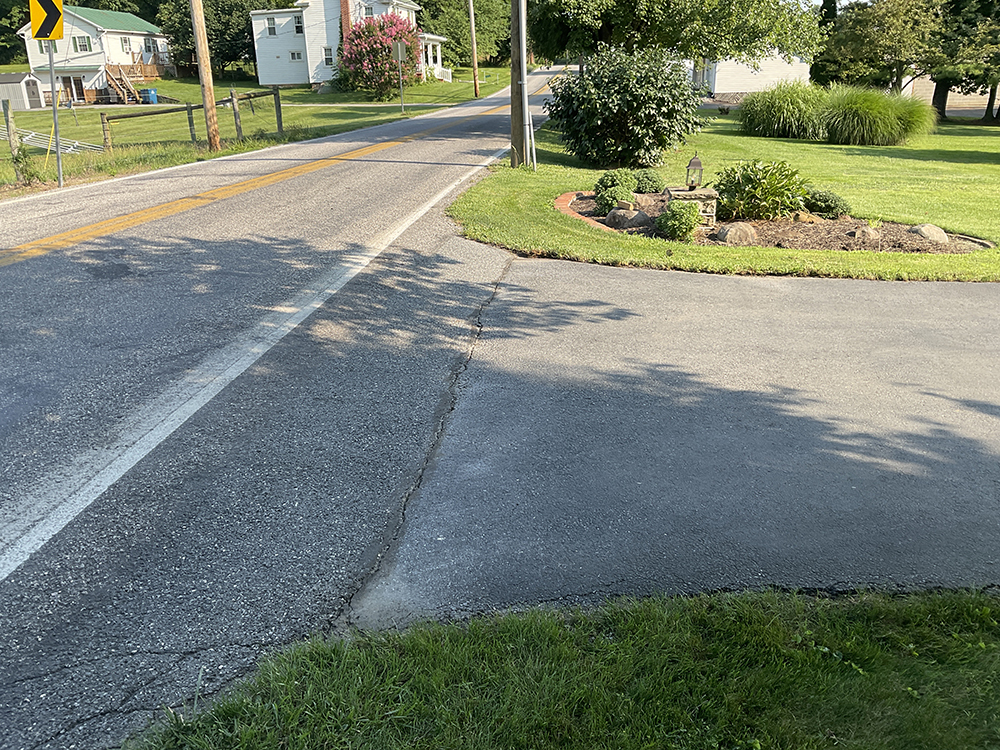
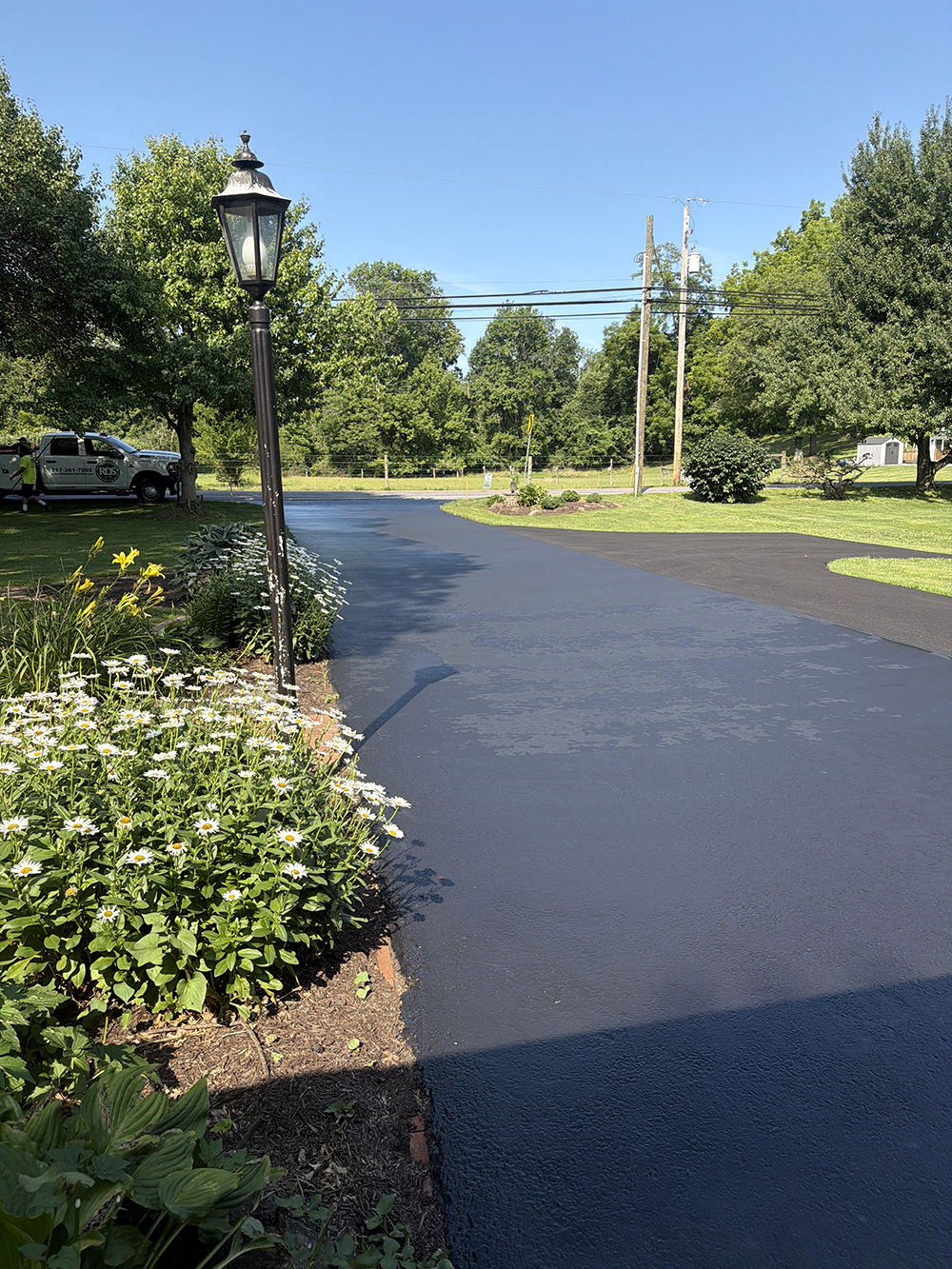
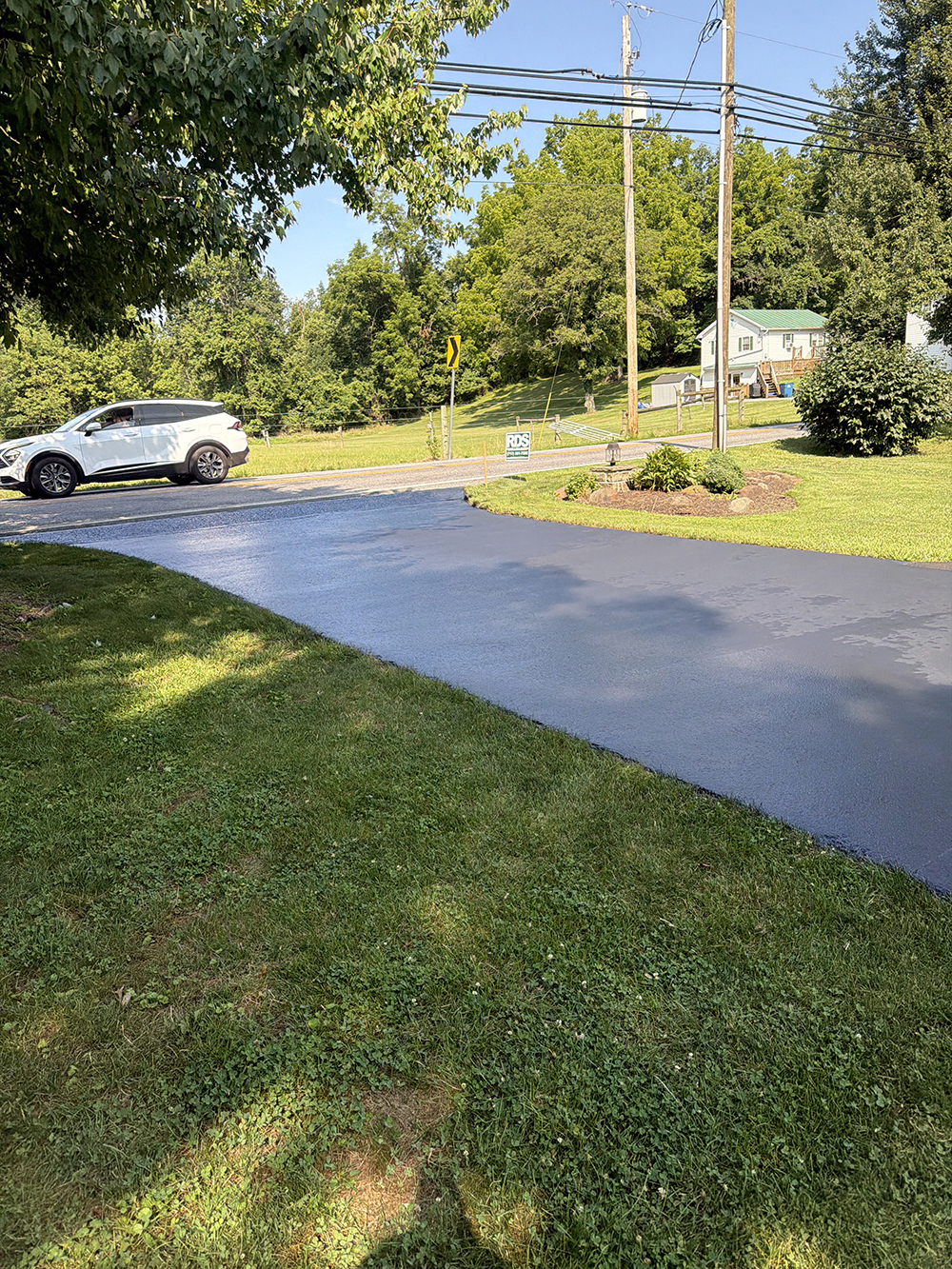
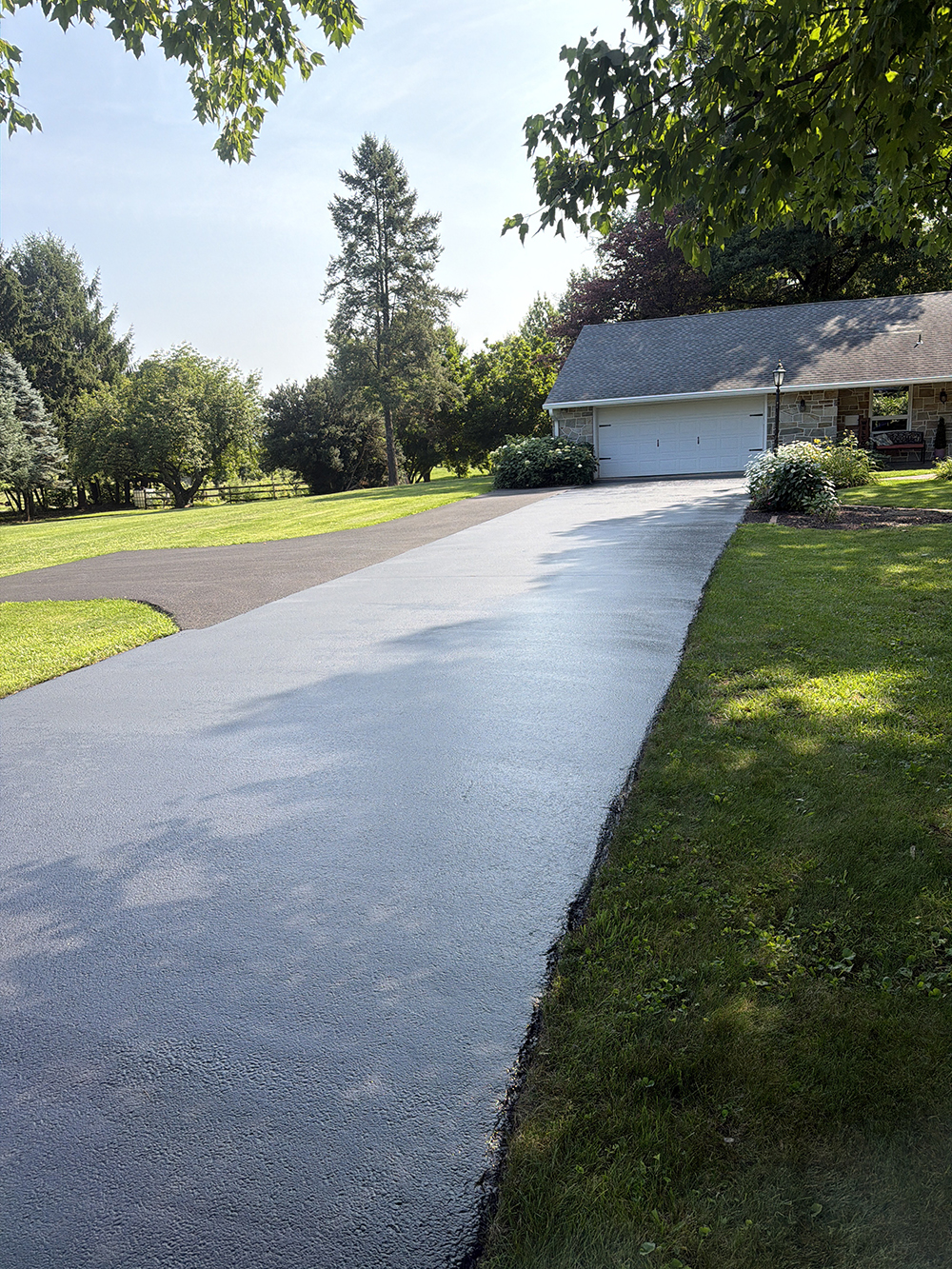
The driveway runs from the road toward the garage, with a broad paved approach and adjoining sections. The homeowner had already expanded their asphalt driveway that year, so the newer portion called for different consideration than the asphalt they wanted refreshed.
After evaluating the property, we had two priorities: restore the look of the older pavement and give the extension time before its first sealcoating. Treating the entire driveway as though every section were the same age wouldn’t have matched what we found.
Sealcoating the Older Asphalt, Not the New Extension
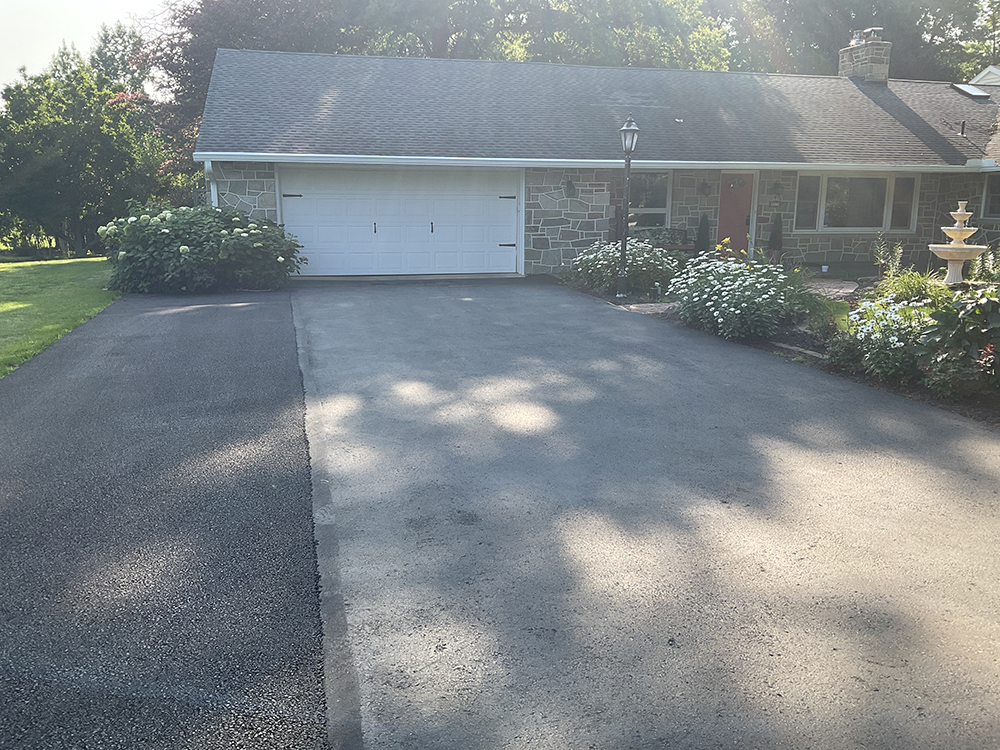
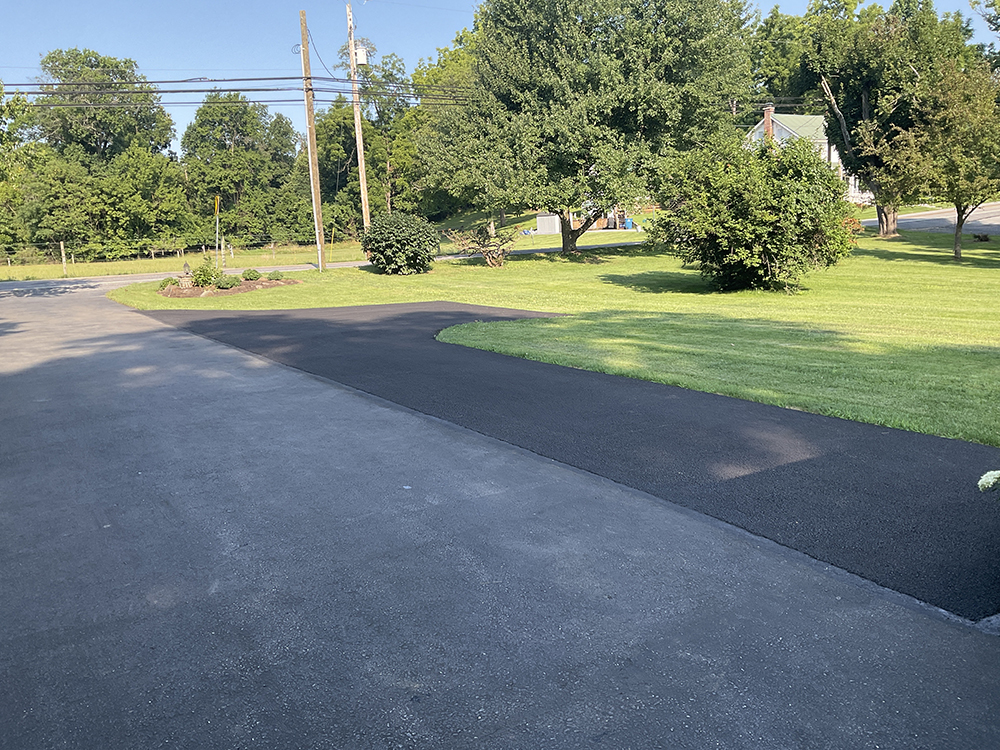
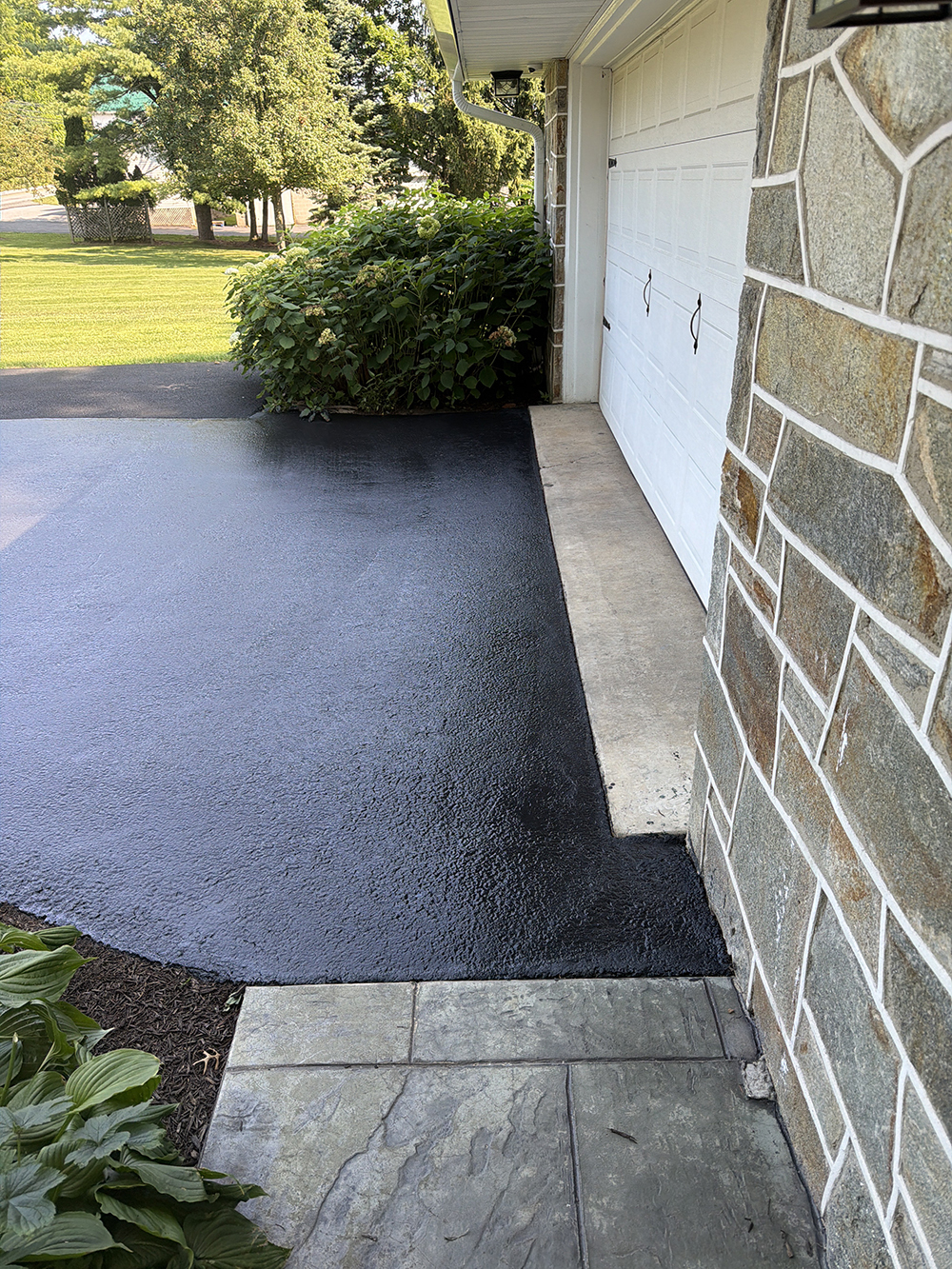
We developed a plan to apply asphalt sealcoating to the existing asphalt while leaving the recent extension untreated. The completed areas have a deep, dark finish beside the lighter new pavement. The boundary between them is visible both across the broad driveway and closer to the garage.
Sealcoating can improve the appearance of weathered asphalt. The Colorado Asphalt Pavement Association’s residential driveway maintenance guidance identifies that visual improvement as one reason to seal an existing driveway.
For this homeowner, the completed work addressed the faded look that prompted the call, without coating a section that wasn’t ready.
Why We Recommended Waiting on the New Asphalt
The extension had been installed earlier that year. We recommended giving it additional curing time rather than applying sealer immediately. Newly laid asphalt can retain surface oils as it ages, and sealing too soon may interfere with adhesion.
Our concern was that a premature application could lead to problems such as discoloration or an ineffective coating. These were potential risks behind our recommendation, not problems that had already developed on the extension.
Good pavement maintenance sometimes involves doing less now so the next treatment can be timed appropriately. The Pavement Coatings Technology Council’s guidance on curing new asphalt before sealcoating explains that curing periods vary with asphalt type, weather, and construction conditions.
We left the newer pavement alone so its first sealcoating could be considered after more time had passed.
The Homeowner Appreciated the Decision to Wait
The customer appreciated our honesty and understood why the older sections received sealcoating while the new extension did not. They were pleased with the finished work and agreed that waiting on the extension was the right choice.
That decision reflects our approach to customer recommendations: evaluate the pavement and recommend the work that fits its condition, even when the recommendation is to wait.
The homeowner plans to return when the extension is ready, with the goal of having the entire driveway sealcoated in the future.
Get the Right Sealcoating Plan for Your Driveway
If your driveway has faded asphalt alongside a newer section, you may not need to sealcoat everything at once. We can evaluate the condition of your pavement and recommend what makes sense to treat now and what should wait.
To find out what your driveway needs, request a residential driveway sealcoating estimate from our team.