 Stop Pavement Cracks Before They Spread
Every small crack in your parking lot is an open door for water. Once moisture reaches the base beneath your asphalt, freeze-thaw cycles widen the gap, weaken the foundation, and turn a minor line into a pothole. For commercial property owners across Central Pennsylvania, that slow damage adds up to expensive repairs.
RDS Paving & Sealcoating helps you get ahead of it. With five decades of pavement experience across the region, our crews seal and fill cracks the right way, so water stays out and your lot stays solid.
Common Crack Problems We See
Cracks rarely stay small. Left untreated, they invite the kind of damage that shortens the life of your entire lot.
- Water intrusion — Moisture seeps through cracks and erodes the base layer below.
- Freeze-thaw damage — Trapped water expands in winter and breaks the asphalt apart.
- Spreading cracks — One line branches into many, creating a web of weak spots.
- Pothole formation — Untreated cracks are the first step toward full pavement failure.
- Trip and liability risks — Widening cracks become hazards for customers and tenants.
Our Solution: Crack Sealing and Crack Filling
These two services sound alike but solve different problems. We use the right method for the cracks in front of us.
- Crack filling — We clean the crack and fill it with material to block water from reaching the base. Best for non-moving cracks.
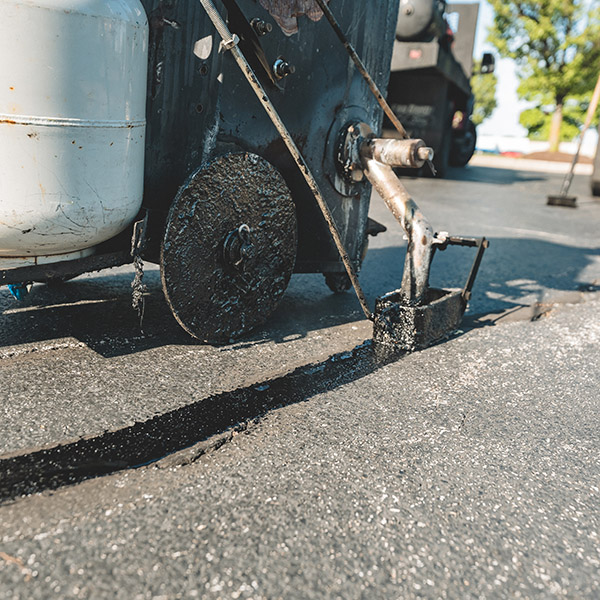
- Crack sealing — We prepare the crack and apply a flexible, hot-applied sealant that moves with the pavement. Best for active cracks that expand and contract with the seasons.
- Hot-pour application — Our hot-applied sealants bond tightly and stay flexible through Pennsylvania’s temperature swings.
We work around your operations with minimal disruption and keep you, your tenants, and your customers informed before we arrive.
What Makes Our Crack Repairs Last
- Thorough prep — Clean, dry cracks let the sealant bond instead of pulling loose.
- The right material — Flexible hot-pour sealant handles expansion and contraction year-round.
- Proper timing — We recommend crack work before sealcoating so the whole surface is protected.
- Exacting detail — Our work is never rushed and is finished to a standard we are proud of.
Why Choose RDS for Crack Sealing
- A family-run, veteran-owned company — Local roots and a personal stake in every job.
- Five decades in the region — Deep experience with Central PA pavement and weather.
- BBB accredited — Trusted by businesses across the area.
- Straightforward pricing — No lowball quotes that balloon after the contract is signed.
- Minimal disruption — Staging that keeps your property open and running.
Frequently Asked Questions
How much does commercial crack sealing cost?
Crack sealing is priced by the size of the lot and the amount, length, and width of the cracking. It is one of the most affordable ways to protect pavement, since it heads off far costlier repairs down the road. We assess your lot and give you an honest, itemized quote.
Is crack filling really worth it?
Yes. Filling and sealing cracks early keeps water out of the base, which is the single biggest cause of pavement failure. A small investment now prevents potholes and base damage that cost far more to fix later.
How big of a crack can be filled?
We treat hairline cracks up to wider gaps, typically anything that water can enter. Once cracks become too wide or the area has crumbled, patching is the better repair. We will recommend the right approach when we inspect your lot.
Will crack sealing prevent potholes?
It is one of the best ways to. Most potholes start as untreated cracks that let water reach the base and break the asphalt apart. Sealing cracks early stops that process before it starts.
How often should a commercial lot be crack sealed?
A yearly check is smart, with sealing done as new cracks appear. Pennsylvania’s freeze-thaw winters open cracks quickly, so staying ahead of them protects your pavement. We can set a realistic schedule for your property.
What is the difference between crack filling and crack sealing?
Crack filling blocks water in stable, non-moving cracks. Crack sealing uses a flexible sealant for active cracks that open and close with temperature changes. We choose based on the condition of your pavement.
When is the best time to seal cracks?
The sooner the better. Sealing cracks early keeps water out of the base and prevents the costly damage that leads to potholes and base failure.
Should crack work be done before sealcoating?
Yes. Crack sealing and filling come first so the surface is protected, then a seal coat can be applied over a sound lot.
How long do sealed cracks last?
With proper prep and quality hot-pour sealant, crack repairs hold up for years. We will recommend a maintenance schedule to keep your lot protected.
Related Services
Crack work pairs well with the rest of our pavement maintenance services:
- parking lot sealcoating — Apply a protective seal coat after cracks are sealed.
- asphalt patching — Repair areas where cracking has already led to failure.
- pavement maintenance — A proactive program that prevents premature repairs.
- asphalt repair — Comprehensive solutions when damage runs deeper than the surface.
Seal Your Cracks Before They Cost You
Protect your commercial lot in Central PA before small cracks turn into big repairs. Contact RDS Paving & Sealcoating at 717.361.7095 for an honest assessment and a realistic quote on crack sealing and crack filling.